Bipolar disorder is complex, unpredictable, and often difficult to manage...
Continue Reading
Your doctor brings up ketamine therapy. Your first thought? “Isn’t that what they give to horses?” Or maybe you remember something about kids using it at clubs. Suddenly, you’re second-guessing whether this psychiatrist actually knows what they’re talking about.
Here’s what’s frustrating: ketamine has been safely used in hospitals for over 50 years. The research on its effectiveness for depression is solid. Yet patients keep walking away from consultations because of myths that just won’t die.
The misinformation problem got worse when social media started treating every medical topic like a debate. Now people are making treatment decisions based on random forum posts instead of clinical evidence. That’s a problem when we’re talking about a therapy that works for 7 out of 10 people who couldn’t find relief anywhere else.
Here’s the truth: ketamine gets used in veterinary medicine, and so does penicillin. Nobody freaks out when their doctor prescribes antibiotics because “that’s what they give sick animals.”
Ketamine Therapy Near Me got FDA approval for humans in 1970. Emergency rooms have relied on it for decades because it’s one of the safest anesthetics available. It doesn’t tank your blood pressure or stop you from breathing like other knockout drugs do.
When we use ketamine for depression, we’re not putting anyone under anesthesia. The dose is maybe one-tenth of what an anesthesiologist would use for surgery. You stay awake, we monitor everything, and you go home the same day.
The “horse tranquilizer” thing is just lazy journalism that stuck around too long.
Some people think ketamine therapy is experimental because their insurance company balks at paying for it. That’s not how medicine works.
Yale researchers have published dozens of studies on ketamine for depression. So have teams at Johns Hopkins, Harvard, Mount Sinai. The data consistently shows response rates around 65-75% for people whose depression didn’t budge with regular antidepressants.
In 2019, the FDA specifically approved esketamine nasal spray for treatment-resistant depression. This wasn’t some rushed approval either – they reviewed data from nearly 1,600 patients in rigorous clinical trials.

This myth comes from misunderstanding how ketamine actually works in your brain.
Regular antidepressants try to boost serotonin levels. They work while you take them, stop working when you quit. Ketamine does something completely different – it literally helps your brain grow new connections between neurons.
Think about it like physical therapy. The exercises help rebuild strength and mobility. Even after you finish PT, those improvements stick around if you maintain them properly. Same concept with Ketamine Treatment NJ: it kickstarts changes in brain structure that can last for weeks or months.
Some patients need booster treatments every few months. Others maintain their improvement much longer. But the idea that benefits vanish immediately? That’s not what the research shows.
The internet loves scary stories about medical treatments. With ketamine, people share horror stories that are either completely made up or involve someone who took massive doses of street drugs.
In clinical settings, serious problems are rare. Most patients feel a little weird during treatment – maybe dizzy or disconnected – but these effects fade within a couple hours. Some people get mildly nauseous. That’s about it for the majority of treatments.
We monitor heart rate, blood pressure, everything throughout the session. If something seems off, we can adjust or stop immediately. After 50+ years of surgical use, we know exactly what to watch for and how to manage any issues.
Compare that to traditional antidepressants, which can cause weight gain, kill your sex drive, or leave you feeling emotionally numb for months. Many patients tell us ketamine side effects are much easier to deal with.

Insurance coverage keeps getting better. Most major plans now cover Spravato nasal spray treatments when you meet their criteria, usually after trying and failing with at least two different antidepressants.
IV ketamine coverage varies more, but we’re seeing approvals increase every year. Even when insurance doesn’t cover everything, lots of patients find it worthwhile considering how fast ketamine can work compared to cycling through multiple pills over months.
We work with companies that specialize in getting ketamine treatments approved. They know exactly what documentation different insurers want and how to present the medical necessity case.
Early ketamine research focused on treatment-resistant depression because researchers wanted to study the toughest cases first. This created the impression that you have to exhaust every other option before trying ketamine.
Not true. Ketamine helps various types of depression: major depression, bipolar depression, postpartum depression. Some patients choose it because they want faster results than waiting two months for Lexapro to maybe work. Others want to avoid sexual side effects or weight gain from traditional meds.
Ketamine For PTSD, has shown promising results, and it’s also effective for certain anxiety disorders, chronic pain conditions like fibromyalgia. It’s not just a desperation play – it’s often a smart first choice.
Here’s where it gets interesting. Every other antidepressant targets the same basic systems: serotonin, norepinephrine, maybe dopamine. Ketamine works on glutamate pathways instead.
Glutamate is your brain’s main “go” signal – it tells neurons to fire and communicate with each other. Depression seems to involve problems with this glutamate system. Ketamine helps reset it, which explains why people can feel better within hours instead of weeks.
This different mechanism means ketamine helps people who don’t respond to serotonin medications at all. It’s not competing with Prozac, it’s addressing a completely different aspect of depression.
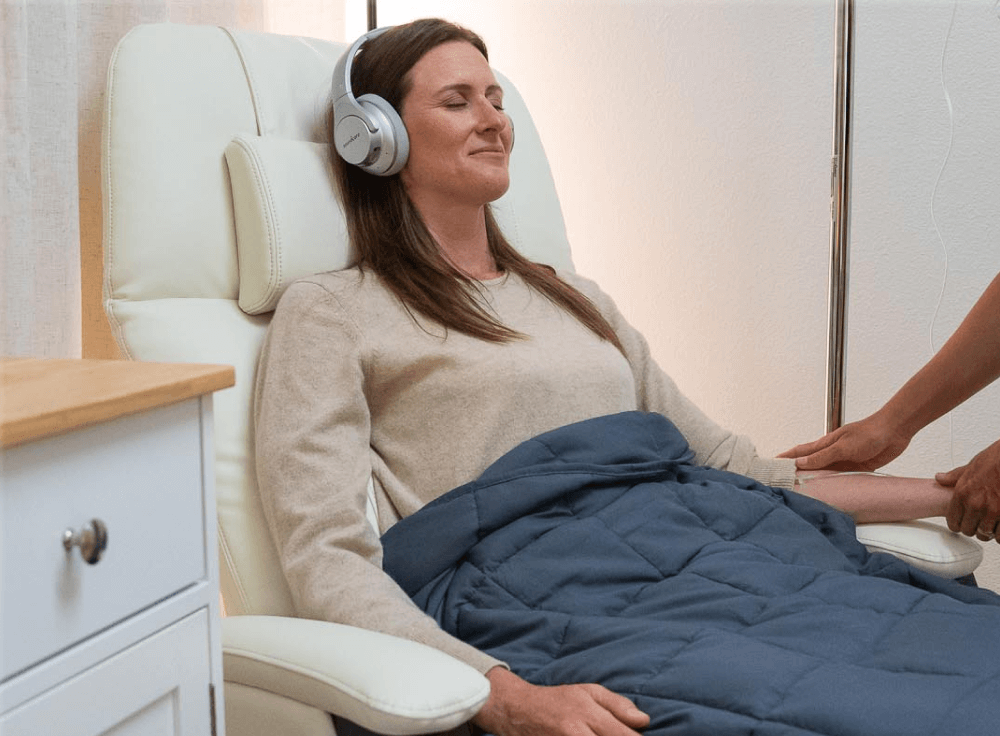
Forget whatever dramatic medical scenes you’ve seen on TV. Ketamine treatment is pretty boring, honestly.
You sit in a comfortable chair, and we start an IV, just like getting blood drawn. The ketamine drip runs for about 45 minutes while we check your vital signs every so often. Most people just relax, listen to music, maybe read.
Some patients feel mildly spacey during treatment. Others barely notice anything unusual. The intensity depends on dosing and how sensitive you are to the medication.
Afterward, you rest for maybe 30 minutes while things normalize. Then someone drives you home (no driving that day), and you’re usually back to normal activities the next morning.
Standard protocol is typically 6 treatments over 2-3 weeks. Some people notice improvement after the first session. Others need 3-4 before seeing changes.
Depression is hard enough without old myths standing in your way. The truth is clear: ketamine therapy has decades of medical research behind it, and for many patients, it works when nothing else has.
If you’re considering treatment, don’t let Reddit threads or headlines make the decision for you. Talk to providers who understand the science, have real-world experience, and can guide you safely through the process.
At Neuroplasticity MD, we cut through misinformation and focus on what matters: helping you feel better, faster. Book a consultation today and get the facts, and the relief, you deserve.
Bipolar disorder is complex, unpredictable, and often difficult to manage...
Continue ReadingLiving with obsessive-compulsive disorder can feel exhausting in ways that...
Continue ReadingAnxiety disorders affect millions of adults nationwide and remain one...
Continue ReadingMedical ketamine is pharmaceutical grade with precise dosing and purity standards. Street drugs are unregulated, often contaminated, and used at dangerous doses. It’s like comparing prescription morphine in a hospital to street heroin – completely different safety profiles.
Usually yes. Most patients continue their existing medications while doing ketamine therapy. We review everything you’re taking to check for interactions, but ketamine generally plays well with other psychiatric medications.
Previous substance abuse doesn’t automatically rule out ketamine treatment, but it requires careful evaluation. We look at each situation individually and might recommend extra monitoring or support during treatment.
Many people notice some improvement within 24-48 hours of their first treatment. Others need several sessions before seeing significant changes. We usually recommend completing at least half your treatment series before deciding whether it’s helping.
Ketamine works safely in adults of all ages. For older patients, we might adjust dosing or monitoring based on overall health. There’s also research happening with adolescents, though that requires special protocols.
Don’t eat for 3-4 hours before your appointment to prevent nausea. Arrange a ride home. Wear comfortable clothes. Bring headphones or something to read if you want. Most important – come with realistic expectations.
Most people are back to regular activities within 24 hours. You can’t drive or operate machinery for several hours after treatment, but cognitive function usually returns to baseline pretty quickly.
Look for providers with psychiatric or anesthesiology training who have specific experience with ketamine therapy. Ask about their protocols, safety procedures, and patient outcomes during your consultation.
Ketamine doesn’t cause physical dependence, so stopping doesn’t trigger withdrawal symptoms. Your depression symptoms might gradually return though. We work with patients to develop maintenance plans or transition strategies when needed.
Traditional antidepressants work on serotonin or norepinephrine systems and take 4-8 weeks to show effects. Ketamine is a rapid-acting antidepressant that works through glutamate pathways, often providing relief within hours or days. Many patients find this breakthrough depression treatment more effective than conventional medications.
Yes, ketamine has shown remarkable effectiveness for suicidal ideation treatment. The FDA specifically approved Spravato for depression with suicidal ideation. Many patients experience significant reduction in suicidal thoughts within 24-48 hours, making it a crucial intervention for severe cases.
Coverage varies, but it’s improving rapidly. Most major insurers cover Spravato nasal spray for treatment-resistant patients who meet specific criteria. IV ketamine infusion coverage is less universal but increasingly available. We work with specialized companies to maximize your chances of approval.
We use cookies to improve your experience on our site. By using our site, you consent to cookies.
Manage your cookie preferences below:
Essential cookies enable basic functions and are necessary for the proper function of the website.
You can find more information in our Cookie Policy and Privacy Policy.
Our goal is to offer lasting solutions that stand strong against the obstacles you encounter. Prioritizing durability while providing immediate relief, we are dedicated to helping you reclaim control and embrace a brighter future.