
New York City has become one of the most developed markets in the country for ketamine infusion therapy. As awareness of ketamine’s clinical potential has grown, a significant number of specialized clinics have opened across Manhattan and the surrounding boroughs, offering patients access to one of the most effective treatments available for depression, anxiety, PTSD, and other treatment-resistant conditions.
If you’re researching ketamine infusion NYC options, the sheer number of providers can make the decision feel complicated. This guide covers everything you need to know, from how ketamine infusions work and who they’re appropriate for, to what distinguishes a high quality provider in the NYC market and what you can realistically expect in terms of cost and outcomes.
What Is Ketamine Infusion Therapy?
Ketamine infusion therapy involves the administration of ketamine at sub-anesthetic doses through an intravenous line in a supervised clinical setting. At these doses, ketamine doesn’t produce the sedation associated with its use as a surgical anesthetic. Instead, it produces a dissociative, often dreamlike state during the infusion while simultaneously triggering rapid changes in brain connectivity that produce clinical improvements in mood, anxiety, and other symptoms.
The neurological mechanism behind ketamine’s psychiatric effects involves its action on NMDA receptors in the glutamate system. By blocking these receptors temporarily, ketamine triggers a cascade of downstream effects that promote the growth of new synaptic connections, particularly in the prefrontal cortex and other regions involved in mood regulation. This process, known as synaptogenesis, is believed to be the primary driver of ketamine’s rapid antidepressant effects.
Research published through the National Institutes of Health has documented ketamine’s rapid and meaningful antidepressant effects, including in patients who have not responded to multiple other treatments, establishing it as one of the most significant developments in psychiatric pharmacology in recent decades.
Who Is Ketamine Infusion Therapy Appropriate For?
Ketamine infusion therapy is most commonly used for patients with treatment-resistant conditions, meaning those who have tried at least two conventional treatments without achieving adequate relief. The conditions most frequently treated with ketamine infusions include:
- Treatment-resistant major depressive disorder
- Bipolar depression, particularly the depressive phase of bipolar I and II
- Post-traumatic stress disorder (PTSD)
- Generalized anxiety disorder and social anxiety disorder that hasn’t responded to medication
- Obsessive-compulsive disorder (OCD)
- Chronic pain conditions including complex regional pain syndrome (CRPS) and fibromyalgia
Ketamine is not appropriate for everyone. Patients with a history of psychosis or schizophrenia, active substance use disorders involving certain substances, or certain cardiovascular conditions may not be good candidates. A thorough psychiatric and medical evaluation is essential before beginning treatment.
What to Expect During a Ketamine Infusion Session
For patients who haven’t received ketamine before, understanding what the experience involves helps reduce uncertainty and makes the first session significantly more comfortable.
Before your first infusion, you’ll have a comprehensive evaluation with a psychiatrist who will review your history, current medications, and treatment goals. You’ll be asked to fast for several hours before each session and to arrange transportation, as you won’t be able to drive afterward.
During the infusion, you’ll recline in a comfortable chair or bed in a private room. A small IV line is placed in your arm and the ketamine is administered slowly, typically over 40 to 60 minutes. Most patients experience dissociative effects during this period, which can include a dreamlike or floating sensation, altered perception of time or space, and mild visual or perceptual changes. These effects are temporary and resolve during the recovery period following the infusion.
You’ll be monitored continuously throughout the session by a trained clinical team. Vital signs including blood pressure, heart rate, and oxygen saturation are checked regularly. A physician or nurse is present throughout to ensure your safety and comfort.
After the infusion, you’ll rest for 30 to 60 minutes while the immediate dissociative effects resolve. Most patients feel clear-headed enough to leave within an hour of the infusion ending, though some prefer a longer recovery period after their first session.
How Many Sessions Will You Need?
The standard initial course of ketamine infusion therapy involves six infusions delivered over two to three weeks. This protocol is based on the clinical trial data that established ketamine’s effectiveness for depression and has become the most widely used approach in outpatient ketamine clinics.
Many patients begin to notice meaningful improvement after the second or third infusion, though individual responses vary considerably. Some patients experience significant relief after a single infusion, while others don’t notice clear changes until the fourth or fifth session.
After completing the initial course, your provider will assess your response and recommend a maintenance plan. Patients who respond well often benefit from periodic maintenance infusions, typically spaced two to six weeks apart, to sustain their improvement over time. The frequency and duration of maintenance treatment varies by individual and is adjusted based on ongoing response.
Ketamine Infusion Costs in NYC
Ketamine infusion therapy is not covered by most commercial insurance plans, as it remains an off-label treatment for psychiatric conditions. Patients in New York City typically pay out of pocket, and costs reflect the higher overhead of operating in a major metropolitan market.
In NYC, individual ketamine infusion sessions generally range from $600 to $900, making a standard initial course of six infusions approximately $3,600 to $5,400. Some clinics offer package pricing for the full initial course at a slight discount compared to individual session rates.
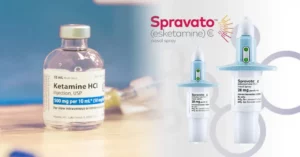
If insurance coverage is a significant consideration, it’s worth exploring Spravato (esketamine nasal spray), the FDA-approved form of ketamine that is covered by most major insurance plans for patients with treatment-resistant depression. A qualified psychiatrist can help you understand whether Spravato is a clinically appropriate alternative for your specific situation.
What Sets a Quality Ketamine Provider Apart in NYC
The NYC ketamine market includes providers ranging from highly specialized interventional psychiatry clinics to more general wellness-focused centers. Here’s what distinguishes the former from the latter:
- Psychiatric leadership: treatment is overseen by a board-certified psychiatrist with specific expertise in ketamine therapy and treatment-resistant conditions
- Comprehensive evaluation: a thorough psychiatric assessment before any treatment begins, not just a medical screening
- Integration support: some of the strongest clinical outcomes come from clinics that offer therapy alongside ketamine treatment to help patients process and integrate their experience
- Transparent communication: clear information about costs, realistic outcome expectations, and what happens if you don’t respond as hoped
- Safety protocols: continuous monitoring during sessions and a clear process for managing any adverse reactions

Ketamine and Therapy: The Integration Approach
An increasing number of NYC ketamine providers offer what’s known as ketamine-assisted therapy or ketamine-assisted psychotherapy, which combines infusion treatment with structured therapeutic support. The rationale is that ketamine’s neuroplasticity effects create a window of heightened receptivity during which patients may be more able to engage productively with therapeutic work.
For patients whose depression or anxiety has significant psychological or trauma-related components, the integration approach may produce more durable results than infusions alone. If this is relevant to your situation, ask any provider you’re evaluating whether they offer therapeutic support alongside their infusion program.
Starting the Process in New York City
For patients in NYC ready to explore ketamine infusion therapy, the first step is scheduling a consultation with a qualified interventional psychiatry clinic. Come prepared with your treatment history, a list of medications you’ve tried, and any documentation from previous providers.
Patients looking for a psychiatry-led ketamine program in New York City can learn more about comprehensive treatment options through Village TMS ketamine NYC, where board-certified psychiatrists provide individualized ketamine infusion therapy alongside a full range of interventional treatments.
Final Thoughts
Ketamine infusion therapy represents one of the most significant advances in psychiatric treatment in recent decades. For patients in New York City who have struggled to find relief through conventional approaches, the availability of high quality ketamine providers makes it a genuinely accessible option.
Taking the time to choose a provider that meets a high clinical standard, with proper psychiatric oversight, thorough evaluation, and transparent communication, is the most important step you can take toward getting the most out of this treatment.